What's Happening
The Enhanced Games, the startup competition that allows and actively encourages performance-enhancing drug use, held its first event on Sunday, May 24, at a purpose-built open-air stadium at Resorts World on the Las Vegas Strip. The one-day competition featured 42 athletes across swimming, track, and weightlifting, many of them former Olympians lured out of retirement by paydays that dwarf anything available in sanctioned sport.
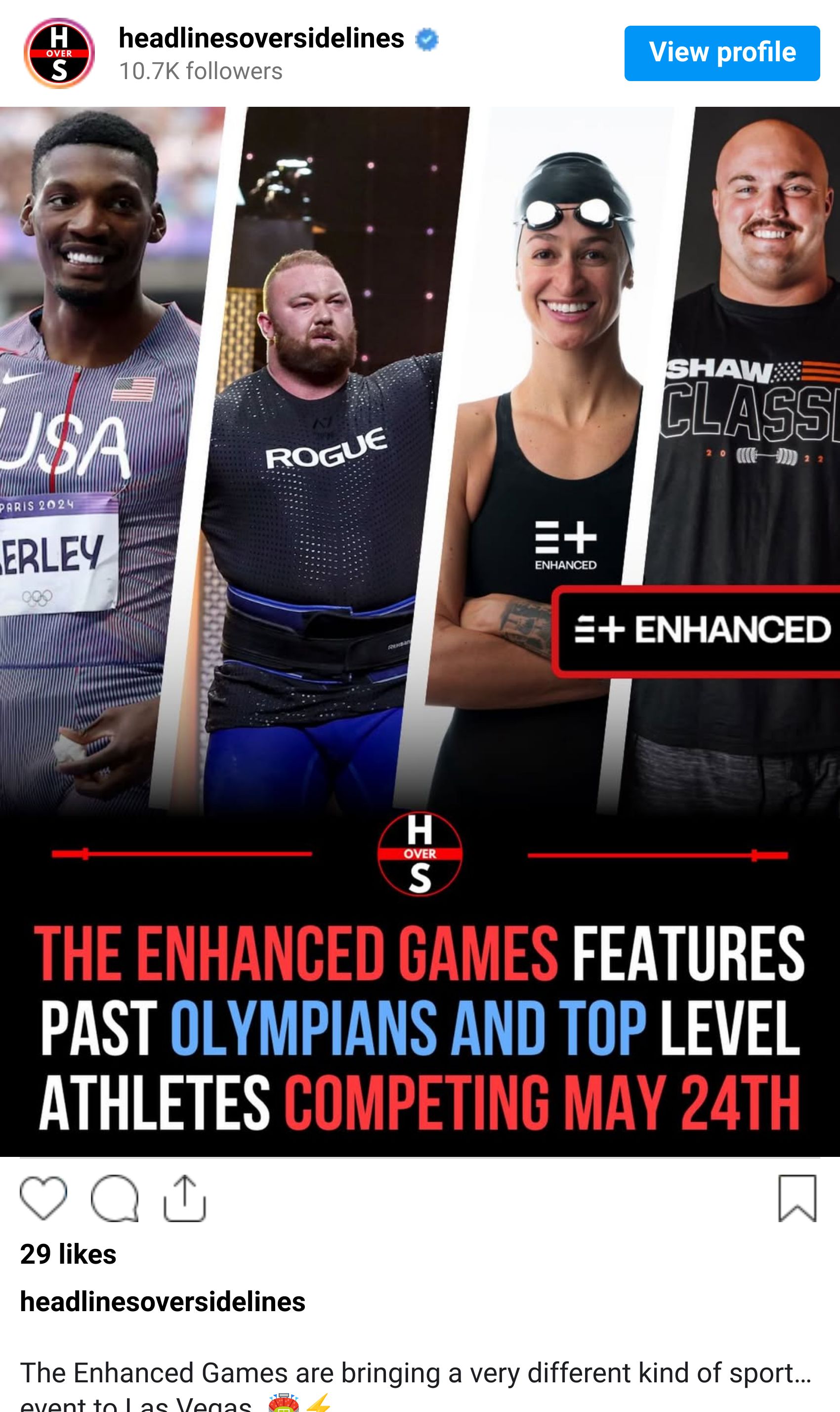
The money is the entire pitch. Event winners earned $250,000, last place paid $20,000, and any athlete who beat a standing world record stood to collect a $1 million bonus on top. Greek swimmer Kristian Gkolomeev delivered the night's only record, going 20.81 in the 50-meter freestyle to edge Cameron McEvoy's official 20.88 mark, earning a reported $1.5 million for his weekend's work. His coach summed up the result in two words: "He's rich."
Of the 42 competitors, 38 chose to dope. According to the Games' own medical data from a clinical trial conducted during training, 91% of participating athletes used testosterone, 79% used human growth hormone, 62% took stimulants like Adderall, and 41% used EPO. Athletes now enter a five-year observation period. The four athletes who competed clean actually won both 100-meter track races. Fred Kerley took the men's in 9.97, Tristan Evelyn the women's in 11.25, and swimmer Hunter Armstrong won the 50-meter backstroke without drugs, walking away with $375,000.
Records set at the Games are not recognized by World Aquatics or World Athletics, both because PEDs were permitted and because swimmers wore the polyurethane "super suits" banned from sanctioned competition since 2009.
Why It Matters
The Enhanced Games crossed the line from controversial concept to actual event, and that alone reshapes the conversation. For two years this was a thought experiment that anti-doping bodies could dismiss. Now it's a real competition with real results, real medical data, and real athletes who took the money which makes it much harder to wave away.
The results, though, undercut the marketing. The premise was that removing doping restrictions would unlock superhuman performances, but the night produced exactly one record-beating swim, and that came with banned suits attached. Clean athletes won all four sprint titles. Several "enhanced" results were times an athlete could post at a normal sanctioned meet. The spectacle promised a rewriting of the limits of human performance and mostly delivered slightly-off-peak performances from aging former Olympians.
What it did prove is that money moves athletes. In Olympic sports, where prize money is thin and sponsor contracts often shrink when results dip, six-figure guaranteed payouts are life-changing. One British sprinter noted he could finish last in Vegas and out-earn an Olympic relay medal. That economic reality is the Enhanced Games' most powerful recruiting tool, and the biggest threat it poses to the traditional sporting establishment.
Bigger Picture
The real business model isn't the competition, it's the pharmacy. Enhanced went public on May 8 (NYSE: APAD) and now sells the same categories of products its athletes use: GLP-1s, peptides, supplement blends, and multi-month supplies of testosterone and sermorelin. The Las Vegas event functions as a live billboard for that storefront. Critics, including the World Anti-Doping Agency, have argued from the start that the entire spectacle exists to sell drugs and supplements to impressionable viewers, with WADA's science director likening it to a "Roman circus."
That's the tension worth watching. The Games are backed by deep-pocketed investors including Peter Thiel and a firm led by Donald Trump Jr., and the organizers frame enhancement as a matter of transparency and athlete choice. But the combination of a public company, a direct-to-consumer drug business, and a live event glamorizing PED use raises obvious concerns about younger athletes and everyday consumers trying to emulate protocols without medical supervision. One Olympic gold medalist competing Sunday admitted that if teenagers asked him about copying his regimen, his answer would be "brutal honesty", they don't need it. Whether the Enhanced Games become a fringe curiosity or a genuine disruptor, they've already succeeded at their first goal: everyone is talking about them.