What's Happening
Quaker, the century-old oats brand owned by PepsiCo, is moving deeper into the protein craze with Oat Shake & Go, a new grab-and-go protein and oatmeal drink mix. Despite looking like a ready-to-drink beverage, it is actually a powder supplement: the product comes in a bottle you add water or milk to, then shake and go, as the name suggests.
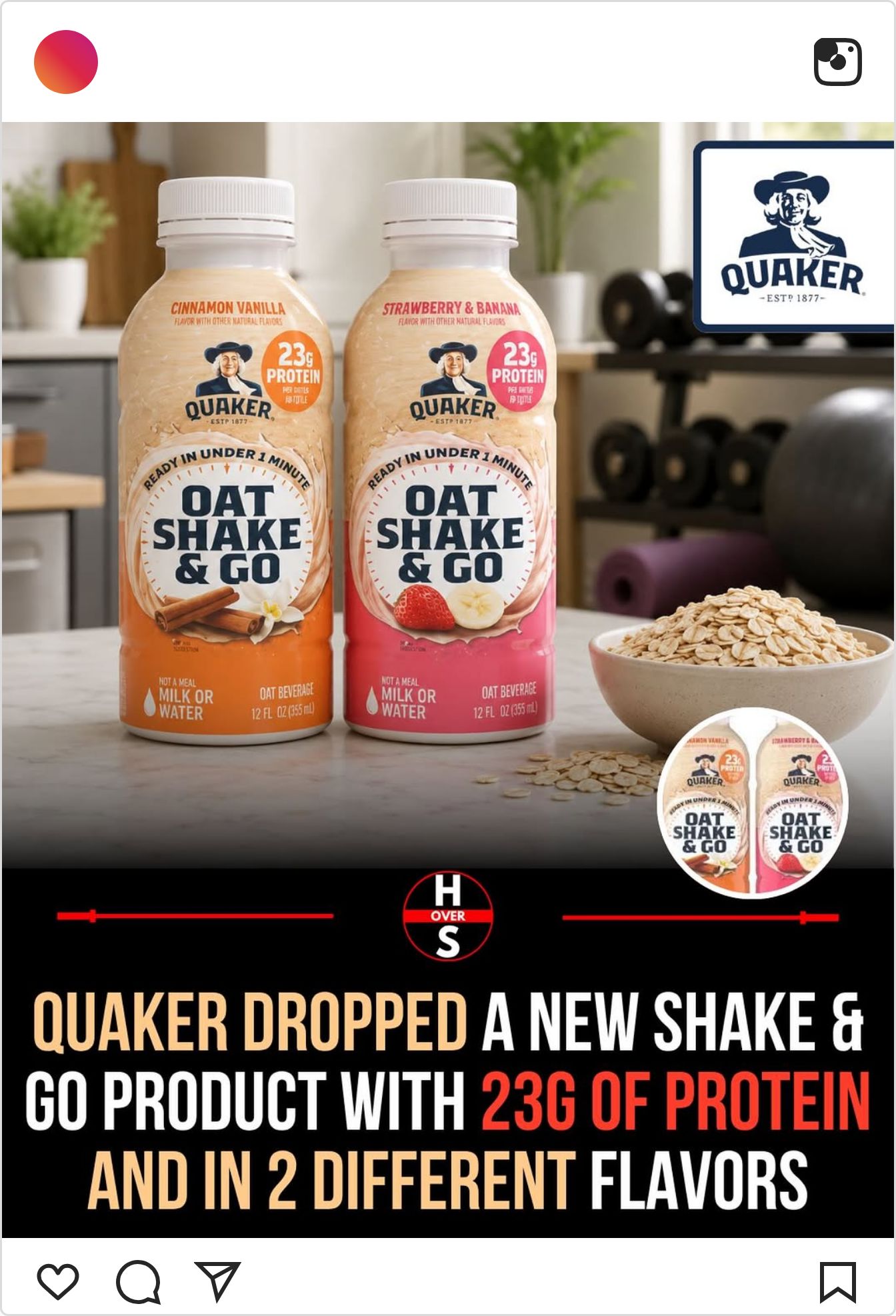
The nutrition profile leans on Quaker's core strength, combining wholesome whole grain oats with two reliable protein sources in whey isolate and calcium caseinate, plus real fruit and flavoring ingredients depending on the variety. Each serving delivers 23 grams of protein, an equal 23 grams of carbohydrates, 9 grams of sugar, and 170 calories. It launches in two flavors, Strawberry & Banana and a more breakfast-suited Cinnamon Vanilla, priced individually at just over $3, and is rolling out to stores shortly.
Why It Matters
This is a legacy brand chasing the single hottest trend in food. Protein has gone fully mainstream, and Quaker has an obvious right to play: it already owns the carbohydrate side of the breakfast equation with oats, so bolting on 23 grams of protein is a natural extension rather than a stretch. The Shake & Go format is a direct answer to the convenience-first way people now eat breakfast, targeting the same on-the-go moment that drives sales of protein shakes and bars.
The balanced macro split is the interesting positioning choice. At 23 grams of protein against 23 grams of carbs, Quaker is pitching this less as a pure protein bomb and more as a genuine mini-meal, oats plus protein in one bottle, aimed at people who want breakfast nutrition without preparation. That differentiates it from the flood of protein products that treat carbs as the enemy, and plays to Quaker's whole-grain heritage.
Bigger Picture
Oat Shake & Go is one piece of a sweeping protein push across PepsiCo's portfolio. The company has been rolling out protein versions of its biggest names, from Propel Clear Protein to Quaker Protein Rice Crisps to Doritos Protein, betting that added protein can revitalize mature brands and command a premium. Quaker alone has been expanding aggressively into high-protein granola, porridge, instant oatmeal, and snack bars, much of it tied to its sponsorship of the FIFA World Cup 26. Company data pegging the opportunity is striking: it cites figures showing that a large majority of Americans are actively trying to add more protein to their diets.
The challenge is standing out in an increasingly crowded field. Protein drink mixes and shakes are a fiercely competitive space, from dedicated sports-nutrition brands to other Big Food players making the same pivot. Quaker's bet is that its oats heritage and whole-grain credibility give it a differentiated, breakfast-native angle that pure supplement brands can't easily match. Whether shoppers reach for a Quaker protein shake over an established name will test how much that trusted-brand equity is worth in a category built on performance and macros.
Sources