Why It Matters
Promealplan has launched a major AI-powered upgrade to its platform, rolling out a new suite of tools designed to dramatically reduce the time it takes for nutrition coaches, trainers, and dietitians to create personalized meal plans.
The update introduces Yuzu, an embedded AI assistant built directly into the platform. Yuzu allows coaches to navigate features, get guidance on building plans, and troubleshoot workflows without leaving the system, reducing onboarding time and making it easier to manage more clients efficiently.
The platform has also added AI-generated recipe images, enabling coaches to instantly create professional-looking visuals for each meal without relying on stock photos or manual content creation. This allows meal plans to be delivered with a more polished, branded presentation.
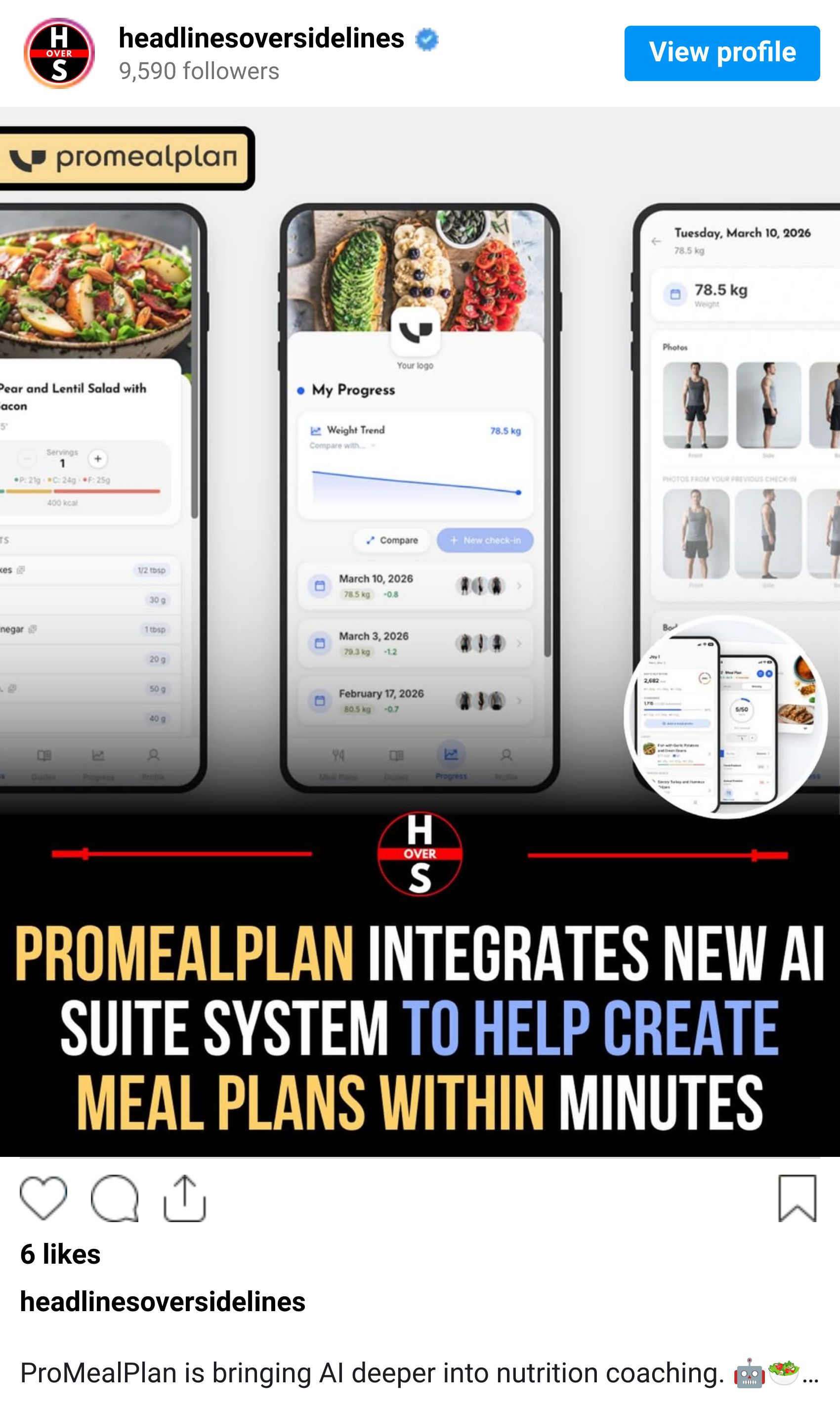
At the core of the update is Version 7 of Promealplan’s meal planning engine, which improves macro and calorie accuracy while increasing variety across weekly plans. The system can now handle over 200 different dietary restrictions and allergies and can generate complete meal plans in under 10 minutes.
Additional functionality includes a barcode scanner that lets coaches instantly add foods by scanning product packaging, along with deeper integration with the USDA FoodData Central database to expand food tracking coverage in the U.S.
The platform already supports over 1,000 recipes and allows coaches to deliver plans through white-labeled PDFs or a branded client app, reinforcing its positioning as a tool built specifically for scalable nutrition coaching.
Why It Matters
This launch highlights how AI is rapidly transforming nutrition coaching from a manual, time-intensive process into a scalable, tech-driven service. Meal planning has traditionally been one of the biggest bottlenecks for coaches, often taking 45 to 90 minutes per client, which limits how many clients a coach can realistically handle. Tools like this compress that process into minutes, fundamentally changing the economics of coaching.
It also signals a shift toward “augmented coaching,” where AI handles repetitive and technical tasks like macro calculations, food selection, and formatting, allowing coaches to focus more on strategy, accountability, and client relationships. This increases both efficiency and the perceived value of the service.
Another key shift is presentation. With built-in AI image generation and white-label delivery, meal plans are no longer just functional documents, they become branded, client-facing products. That elevates the professionalism of online coaching and helps coaches differentiate in a crowded market.
The integration of features like barcode scanning and USDA database support also shows how these platforms are moving closer to real-world usability, bridging the gap between theoretical meal plans and what clients are actually eating day-to-day.
Bigger Picture
AI-powered coaching tools are pushing the fitness and nutrition industry toward a more scalable, semi-automated model where one coach can serve significantly more clients without sacrificing personalization.
At the same time, the category is moving toward full-stack platforms that combine meal planning, client delivery, tracking, and branding into a single ecosystem, reducing the need for multiple tools and simplifying the coaching workflow.