What's Happening
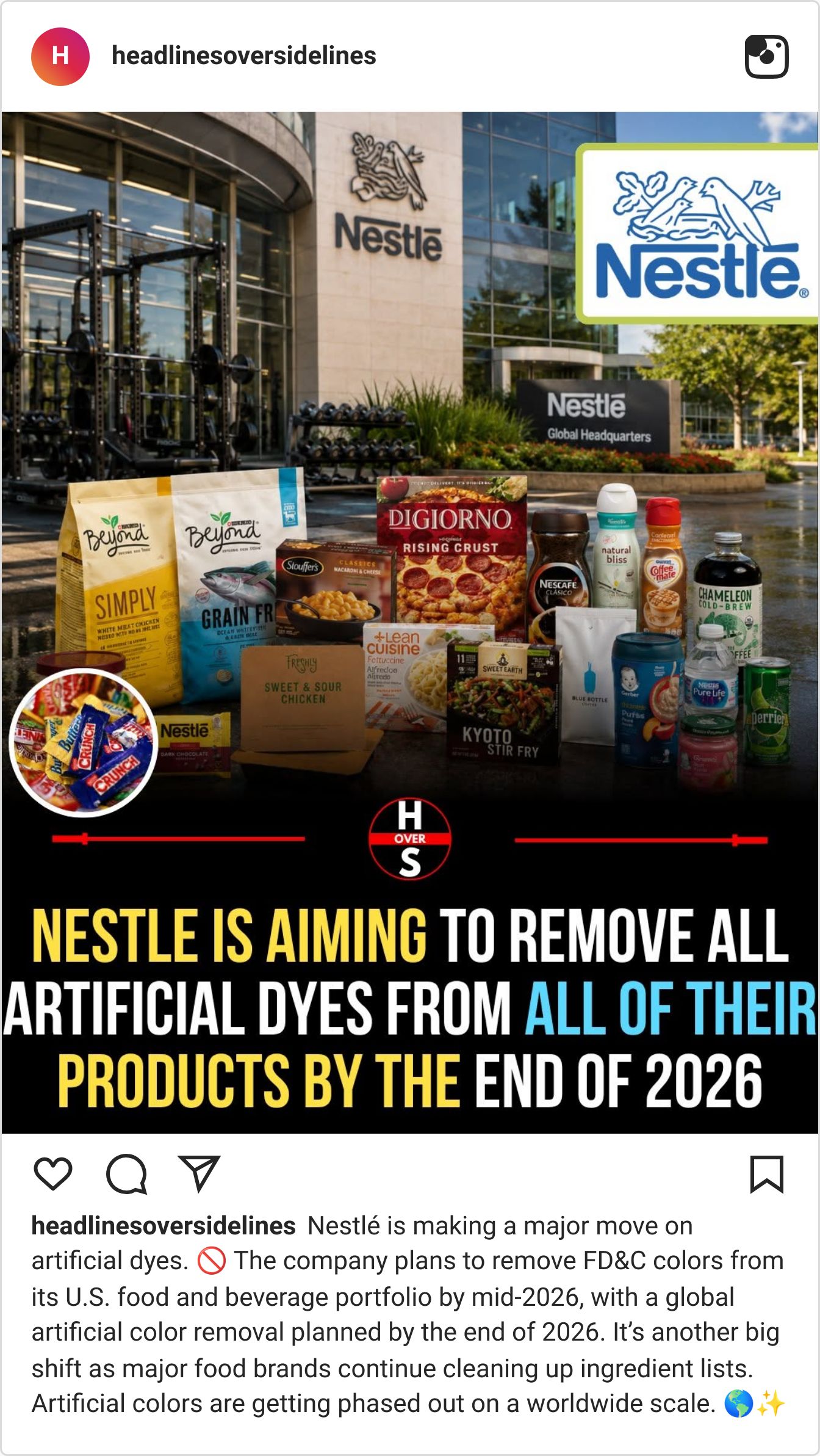
Nestlé has announced it will eliminate artificial food colorings from its entire global product portfolio by the end of 2026, becoming the first major food manufacturer to make a commitment of this scale.
The initiative expands on work the company has already completed in the United States, where Nestlé previously removed FD&C synthetic colors from its food and beverage portfolio. The new commitment extends those efforts to every market where the company operates, replacing artificial colorings with natural alternatives whenever technically possible.
According to the company, the transition has required significant research and development to identify natural ingredients capable of matching the appearance, stability, shelf life, and product quality consumers expect. Rather than simply removing colors, Nestlé has spent years reformulating recipes to ensure products maintain the same overall experience.
The announcement comes as consumers continue demanding simpler ingredient labels and as regulators place greater scrutiny on synthetic food additives. Nestlé says the move is part of its broader strategy to simplify ingredient lists while continuing to improve the nutritional profile of its products.
Why It Matters
Nestlé's decision could have a ripple effect across the global food industry. As one of the world's largest food and beverage companies, changes to its ingredient standards often influence suppliers, competitors, and retailers alike. If successful, the initiative may accelerate similar commitments from other major manufacturers looking to meet growing consumer demand for cleaner labels.
The announcement also reflects how rapidly consumer expectations have evolved. Ingredient transparency has become nearly as important as nutrition itself, with shoppers increasingly paying attention not only to sugar and protein, but also to artificial colors, preservatives, and additives. Companies that proactively address these concerns are positioning themselves ahead of shifting market preferences and potential regulatory changes.
Bigger Picture
The clean-label movement has evolved from a niche wellness trend into one of the biggest drivers of innovation across packaged foods. Over the past several years, manufacturers have reformulated products to reduce sugar, simplify ingredient lists, remove artificial additives, and incorporate more recognizable ingredients as consumers become more informed about what they're eating.
Nestlé's global commitment represents one of the largest ingredient reformulation efforts undertaken by a food company to date. Rather than focusing on a single product line or region, the company is applying the change across its worldwide portfolio, highlighting how ingredient transparency is becoming a competitive advantage for multinational food brands as the industry continues moving toward cleaner, more natural formulations.
Sources
Instagram – https://www.instagram.com/p/DbJlVgWHHCB/