What's Happening
Gymshark officially launched its collaboration with Bratz on June 8, a 20-piece activewear collection built around the doll brand's "passion for fashion" identity. The line includes leggings ($64), shorts ($50), a crop top ($48), a light-support sports bra ($40), and matching script-embroidered jackets and wide-leg pants ($54 each), offered across five washed color shades. Gymshark leaned hard into Bratz's voice in the marketing, promising "snatched silhouettes" and "a whole load of bratitude."
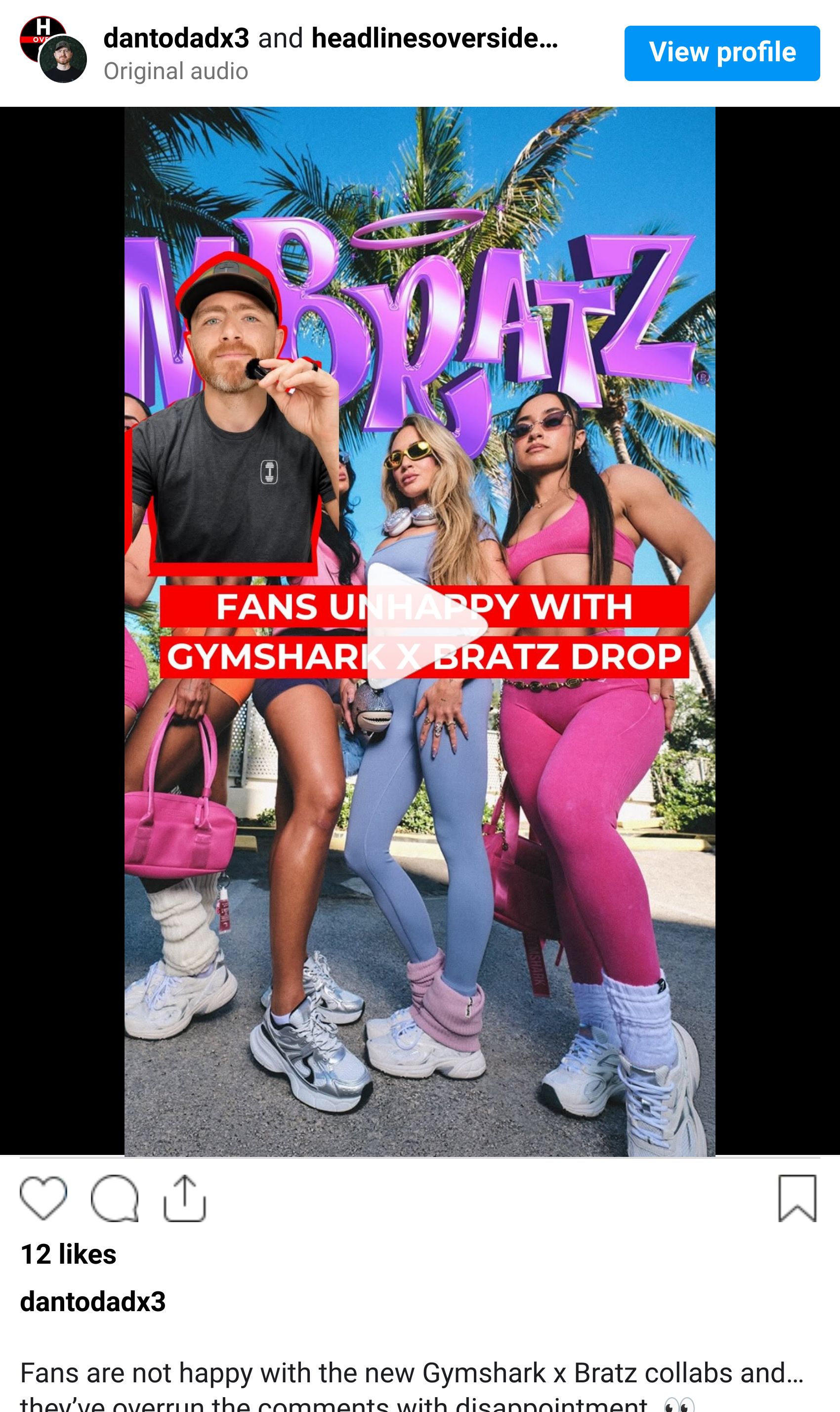
The problem, according to a large share of the audience, is that the clothes don't look anything like Bratz. Critical reactions began rolling in ahead of the launch, once previews revealed colorful but otherwise simple sets without the rhinestones, animal prints, bold graphics, or Y2K excess fans associate with the brand. One Reddit user summed up the dominant take: "This literally looks like any other Gymshark drop." Others called it boring and accused the brand of low effort.
The reaction has been loud and direct in Gymshark's own comment sections, where fans have flooded the brand's launch posts telling it to scrap the line and start over, joking that the collection conveys "nothing" of the Bratz aesthetic, and arguing that needing extra accessories to signal the theme is proof the design missed. Some TikTok users went further, posting AI-generated mockups of the maximalist, rhinestone-covered collection they expected instead.
Why It Matters
This is a textbook example of a collaboration that captured attention but failed to deliver on the specific equity of its partner brand. Bratz's entire appeal is loud, unapologetic Y2K maximalism which is the exact opposite of Gymshark's clean, muted, performance-first design language. By filtering Bratz through its own minimalist house style, Gymshark produced a collection that reads as a standard seasonal drop with a logo attached, and the audience noticed immediately.
The backlash also illustrates how high expectations were. Fans were genuinely excited about a Bratz activewear collab and showed up ready to spend, which is why the disappointment has been so vocal and multiple commenters noted they had been prepared to drop serious money before the reveal cooled them off. When a collaboration trades on nostalgia, the audience arrives with a very specific picture in their heads, and the gap between that picture and the product becomes the story.
Bigger Picture
There's an open debate about whether the reaction actually hurts Gymshark. The collaboration has the whole internet talking, and a portion of the marketing world is asking whether the controversy is accidental or clever rage-bait engineered to drive engagement. Either way, the collection is live and selling, and attention at this scale rarely translates to zero sales. For a brand the size of Gymshark, a polarizing drop that dominates GymTok for a week may still pencil out commercially even as it frustrates fans.
But it lands as a cautionary tale for the broader collab economy. Brand partnerships have become a default growth lever across fitness and consumer goods, and this one underscores that slapping two recognizable names together isn't enough. The audience expects the collaborator's identity to actually show up in the product. Bratz itself is no stranger to collab controversy, having drawn criticism over its first celebrity doll partnership with Kylie Jenner in 2022. The lesson for brands chasing nostalgia is consistent: if you borrow a beloved brand's name, you have to fully commit to its world, or the fans who carried that nostalgia will be the first to call it out.
Sources
Gymshark: Gymshark x Bratz collection