What's Happening
Conor McGregor's MAC Energy has officially launched. The functional energy drink, which McGregor unveiled at The Beverage Forum in late April, went live around its planned July 12 date, landing the day after the fighter's return to the octagon at UFC 329.
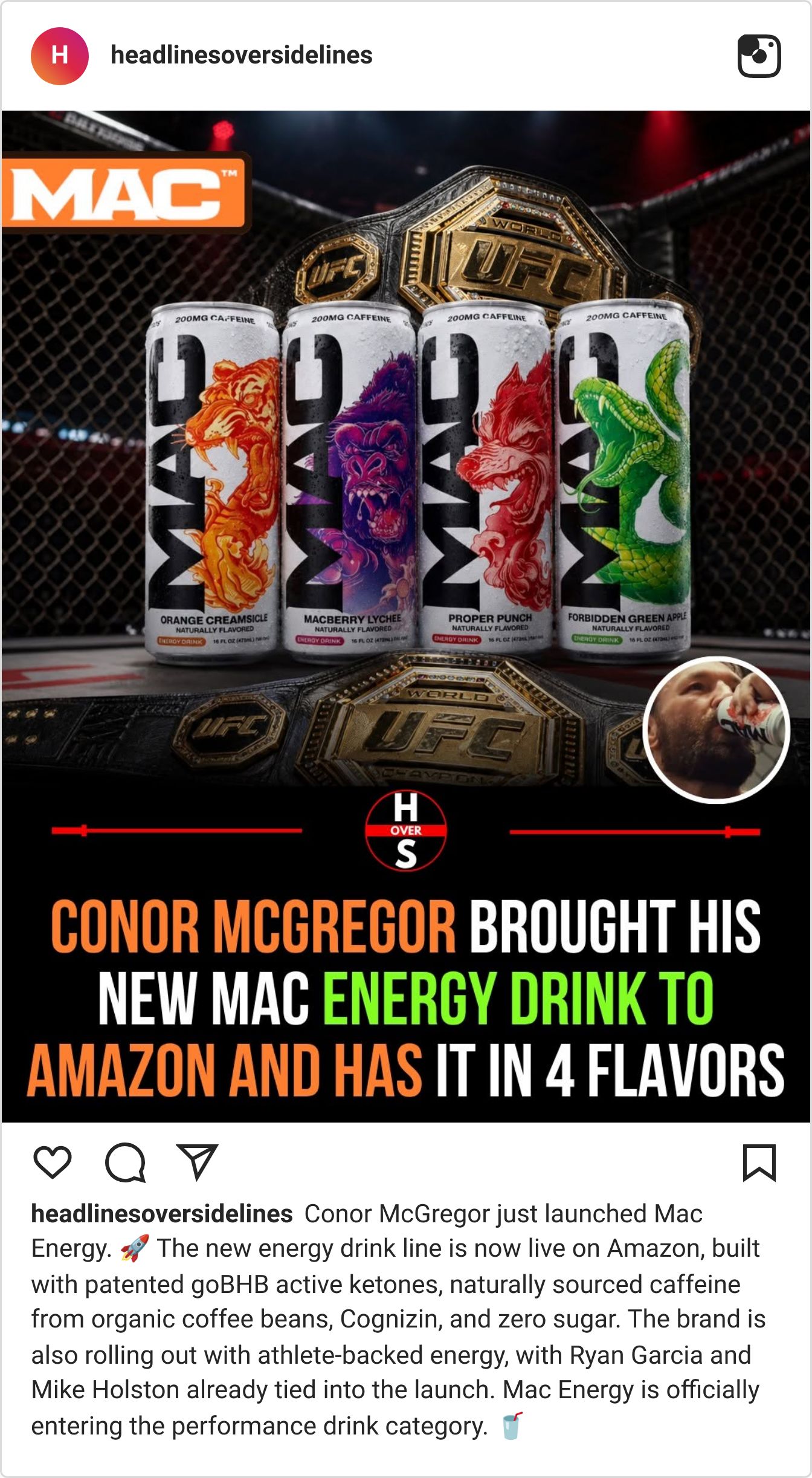
The formula is the pitch. Each can pairs 200mg of PurCaf natural caffeine, sourced from green coffee beans, with 250mg of Cognizin citicoline and 2,000mg of goBHB active ketones. The stack is built to deliver sustained clean energy and mental clarity rather than a stimulant spike and crash, and the drink is sugar-free, dye-free, gluten-free, naturally flavored, and low in calories with a fully disclosed label.
MAC Energy is available now through Amazon, with cases of a dozen cans priced at $29.99, roughly $2.50 per can. Four flavors are live at launch: Orange Creamsicle, Forbidden Green Apple, Macberry Lychee, and Proper Punch, a nod to McGregor's Proper No. Twelve whiskey. A variety pack with three cans of each is listed as coming soon, and the brand's own site at drinkmac.com carries a store finder for retail.
Why It Matters
MAC is a bet that the next wave of energy drinks competes on ingredients rather than raw caffeine. At 200mg, its caffeine dose is squarely mainstream, in line with a Celsius or a Bang, so the differentiation lives entirely in the citicoline and the ketones. Cognizin is a branded, clinically studied form of citicoline used for focus and cognition, and it shows up increasingly in premium nootropic drinks. BHB ketones as an energy source are the genuinely unusual part, and the piece McGregor is building the brand around.
The ketone science deserves a level head. Exogenous BHB can serve as an alternative fuel, but the amounts shown to move the needle in research are typically well above 2g, and evidence for a 2g dose delivering a distinct energy or performance benefit is thin. The Cognizin and caffeine are the doses most likely to be felt. That does not make MAC a bad drink; it makes it a well-formulated caffeine-plus-nootropic product with a ketone story on top, which is a reasonable place to compete.
The celebrity-founder model is proven, for better and worse. McGregor already built and sold Proper No. Twelve whiskey to Proximo, so this is a second at-bat in beverages from someone who has actually exited a drinks brand, not just licensed his face to one. That track record matters in a category littered with athlete cash-grabs.
Bigger Picture
The energy category has become the default landing spot for famous founders, from Logan Paul and KSI's Prime to Lionel Messi's Mas+. MAC enters the same arena but leans harder on function than most, positioning itself alongside the nootropic-forward brands rather than the flavor-and-hype crowd. Whether that resonates depends on how many buyers actually want citicoline and ketones versus another sweet, high-caffeine can.
The launch timing is its own story, and not the one the brand scripted. MAC went live right after UFC 329, where McGregor's comeback ended in seconds with a serious knee injury and a loss to Max Holloway, followed by news of surgery. A performance brand built around its founder's comeback narrative now launches against the backdrop of that comeback going sideways. It is a reminder of the risk baked into founder-fronted products: the person is the marketing, which cuts both ways.
For now, MAC is Amazon-first with retail distribution being seeded through its store finder, a common modern playbook that lets a brand prove demand online before fighting for shelf space. The formula is legitimately differentiated. The open question, as with every celebrity drink, is whether it earns a second purchase once the novelty of the name wears off.
Sources
MAC Energy - https://drinkmac.com/